


In the second quarter of 2026, a total of 1,081 dangerous products were reported in the EU Safety Gate. The portal, formerly known as the RAPEX system, serves the exchange of information between the market surveillance authorities of the EU member states whenever dangerous products are identified. As soon as a product is discovered and reported in one member state, further sale there is generally prohibited. Other member states frequently follow suit by issuing comparable sales bans or ordering recalls for the product concerned.
With 261 notifications, 24.1% of the dangerous products came from the electronics segment, including lighting, multimedia products and fairy lights, followed by cosmetics (20.7%) and toys (19.7%). Baby articles and textiles as well as chemical products also recorded high figures at 6.1% and 5.6% respectively.
In total, the European market surveillance authorities ordered a product recall for 417 products (38.6%). 25.1% of the dangerous products were sold online. 74 products (6.8%) breached the REACH Regulation, and 51 (4.7%) breached the RoHS Directive.
With 658 dangerous products, more than 60.9% originated from the People’s Republic of China. This is a new record, as the share had tended to be below 50% in recent months and years. For a further 94 products (8.7%), the country of origin could not be identified. Most notifications in the second quarter came from France (22%), followed by Italy (13%), Germany (13%), Northern Ireland (11%) and Hungary (5%).
This means 65% of all notifications came from just five member states. It is notable that Spain submitted a total of 20 notifications – a country from which virtually no notifications had been received in recent months and years.
The EU General Product Safety Regulation (GPSR) has been binding since 13 December 2024. It applies in particular where no product-specific rules take precedence – such as the Toy Directive/Regulation, the Low Voltage Directive or the PPE Regulation.
For all affected products, a comprehensive risk analysis has been mandatory ever since, supplemented by technical documentation demonstrating product safety. Careful and structured documentation is therefore long since no longer an optional add-on, but an integral part of a future-proof compliance strategy.
In addition, the new Packaging Regulation enters into force on 12 August 2026. This means that in future a declaration of conformity together with technical documentation will also be required for packaging. Most of the information needed for this is usually held by the manufacturers of the packaged products or by the packaging suppliers.
Responsibility for the technical documentation and the declaration of conformity, however, lies with the companies that design the packaging or have it developed – the so-called “producers”. Many companies are not yet aware of this allocation of responsibility.
If statutory requirements are not met, severe financial consequences loom. A study by Allianz puts the direct costs of a recall for toys or electrical appliances at between €650,000 and €1,000,000. On top of this come further, often underestimated expenses: product modifications, changed packaging and contractual penalties towards trading partners drive total costs up even further.
Import bans, sales stops or customs delays can also lead to revenue losses in the six-figure range even at moderate delivery volumes. The heaviest burden, however, is often the long-term reputational damage, which can lastingly impair market position and further business development.
According to the recall insurer Lockton, around 80% of the true total costs of a recall arise only after the actual recall action – through reputational damage, long-term revenue losses and market share losses that are not captured in insurance claims data.
In view of these risks it becomes clear: a functioning compliance management system is not merely a cost centre, but a strategic instrument. It strengthens the trust of customers and business partners and can develop into a genuine competitive advantage. Companies that establish clear processes and reliable control mechanisms early on reduce the risk of fines, revenue losses and reputational damage – and are considerably better prepared for regulatory changes than their competitors.
For around three years now, cosmetics have repeatedly appeared at the top of the list of dangerous and non-compliant products in the Safety Gate. In the second quarter too, 224 products were found to be non-compliant and made subject to sales bans. What is surprising in the second quarter, however, is that only 50 products still had to be withdrawn from the market because of the substance BMHCA.
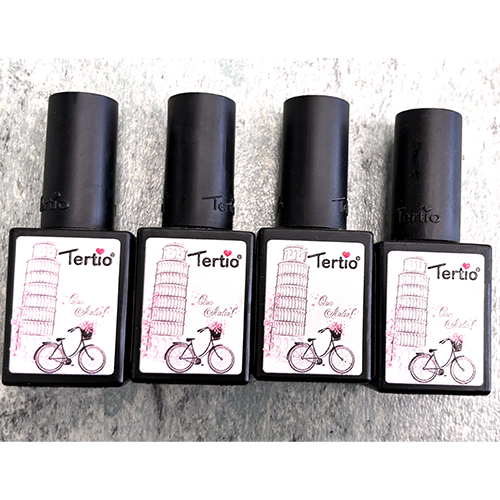
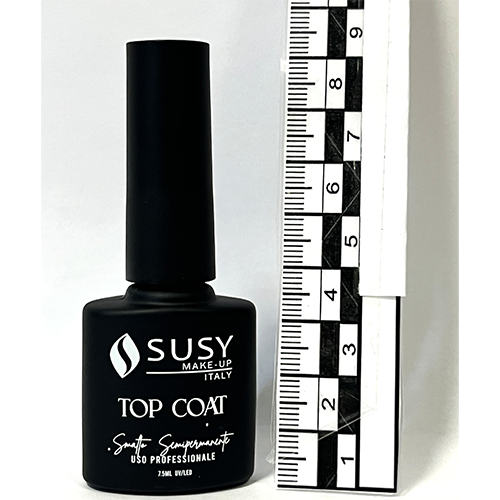
New are now 131 products that contained the substance TPO (diphenyl(2,4,6-trimethylbenzoyl)phosphine oxide). TPO is a photoinitiator that enables the UV/LED curing of gel nail polishes. Following an amendment to the EU Cosmetics Regulation, however, this substance is banned in cosmetics.
In January 2024, the EU Commission reclassified TPO as Repr. 1B (toxic for reproduction). As a consequence, it was added to the list of banned substances under the Cosmetics Regulation (EC) 1223/2009. At a good year and a half, the transition period was comparatively short (classification in early 2024, ban from September 2025) – which is why many manufacturers appear not to have completed the switch of their substances or supply chains in time.
This is also supported by the fact that a large proportion of the non-compliant and banned products originated from the USA and from China. This example illustrates perfectly that product compliance is a continuous process in which it is necessary to monitor constantly which new legal requirements or bans have been adopted in the individual product groups – and to take these into account early in product development and product modification processes.
Incidentally, 97% of these “nail polish breaches” were reported by Italy – a further sign that the Italian market surveillance authorities are pursuing cosmetic products with great vigour.
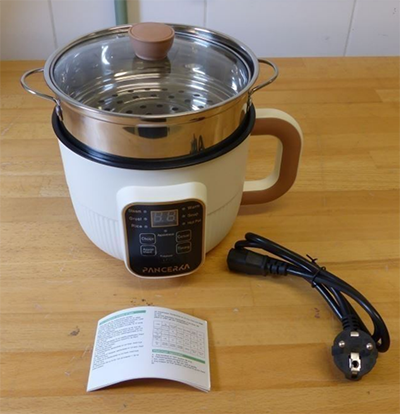
In the electrical products segment, the risks of electric shock, fire or burns were particularly high in the second quarter at 78.5%. Environmental risks, at 19.5%, were lower than in previous quarters. 86.6% of the non-compliant products originated from China; almost half of the products (45.5%) have to be recalled from consumers by the manufacturers or importers.
In the case of an electric multi-cooker from China, distributed in particular via Shein, the handle of the product could overheat and cause burns to the user. The product complied neither with the requirements of the Low Voltage Directive nor with the European standards EN 60335-2-15 and EN 60335-1.
By decision of the French market surveillance authorities, the product must be recalled from end consumers.
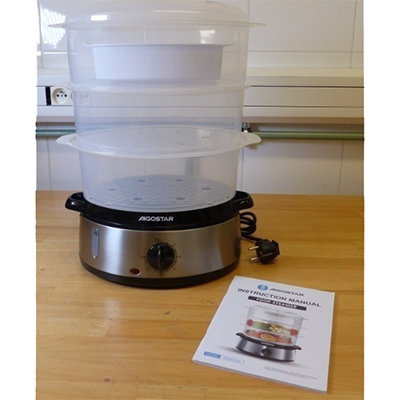
Also subject to a recall by the French authorities was a food steamer from China. The appliance’s power cable could be damaged by a sharp edge around an opening in the metal housing. Users could touch the accessible live parts and receive an electric shock.
The product breached the requirements of the Low Voltage Directive and must be recalled from end consumers. In addition, the listing on the online portal must be taken down.
Among toys, the risk of choking – including further risks – was by far the largest source of risk in the second quarter. 57.3% presented this risk, while a further 23.9% carried a chemical or environmental risk. 39.4% of the products have to be recalled, and 33.8% were sold online. It comes as no surprise that 92% of the products originated from China. For a further 4.7%, the country of origin was unknown.
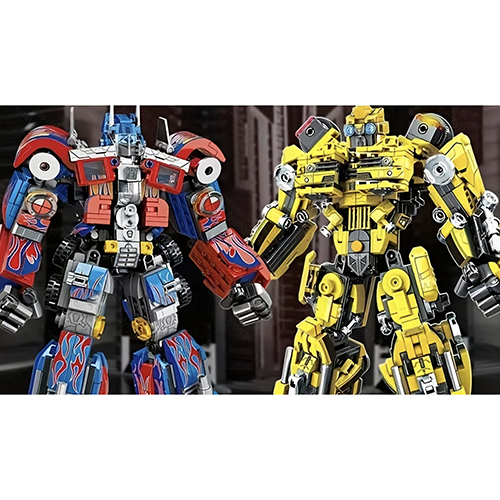
One of the most common defects in toys is small parts that can come loose and that children put in their mouths. A toy robot named Transformer Building Blocks had numerous small parts that could come loose easily. Small children can choke on them.
The product complied neither with the requirements of the Toy Directive nor with the European standard EN 71-1 and must be removed from online listings. In addition, consumers must be warned of the risks – which can at times be a highly complex and time-consuming undertaking.
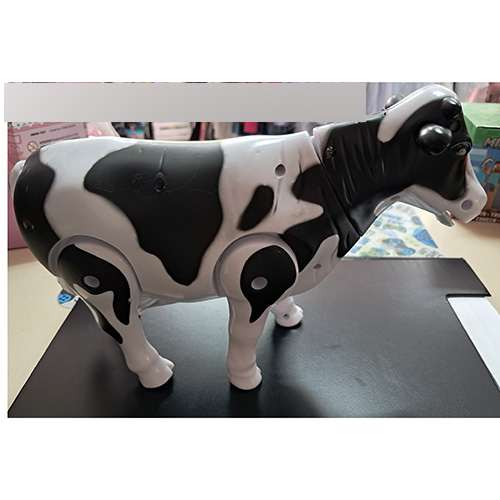
In the case of a cow toy capable of producing various sounds, the sound pressure level was too high (measured value up to 84.8 dB). This could lead to permanent or partial hearing loss. The product was made subject to a sales ban in Poland and was subsequently also withdrawn from the market in Estonia. The toy cow did not comply with the requirements of the Toy Directive or the European standard EN 71-1.
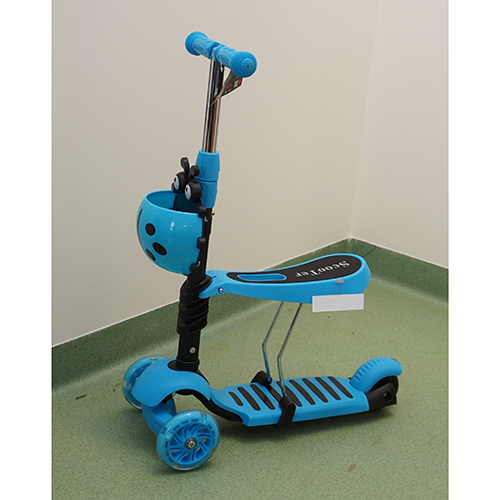
The Polish market surveillance authorities found a children’s scooter to be non-compliant, which subsequently also triggered a sales ban in Estonia. On this children’s scooter the diameter of the front wheels was too small (measured value: 117 mm), which can cause the scooter’s wheel to become stuck on an uneven surface.
In addition, the steering tubes were not sufficiently load-bearing and could collapse during use. The child could fall off the scooter and suffer serious injuries. The product complied neither with the requirements of the Toy Directive nor with the European standard EN 71-1. In this case too, the product must not only be withdrawn from the market – end consumers must additionally be warned of the risks.
Do you distribute electrical goods, toys or cosmetics?
If you see a need for action here, we are happy to support you in identifying potential risks and avoiding additional costs caused by dangerous products.
We support you in setting up appropriate risk management and guide you through the conformity assessment process, including the preparation of the technical documentation, risk analysis and EU declaration of conformity.
What do you need to do now? Book our free initial consultation now.
Save €249!!










Bei den Mühren 1
20457 Hamburg
040 46 86 80 00
Some images on this website were created using AI image generation and serve as illustrative representations of our services.